Planless — run your startup with a built-in cofounder

From your first idea to your first team — one workspace with an AI co-founder who knows your startup, your people, and you.

Try for free — No credit card required. Free plan available. Create account

Zero-knowledge design — we literally cannot read your data. AES-256-GCM client-side encryption.

call your cofounder now — tell her what you're building and hang up with a workspace waiting. Call or text +1 (415) 915-2731.

01 — Memory

She knows your startup. And you.

Every person, number, goal, and decision in your company lives in one memory she keeps. Ask her anything and she answers from the whole picture, not a single chat.

How Cortex works

Cortex is the brain behind her — a three-layer memory (working memory, user profile, knowledge graph) that maps everything connected to your startup and to you as a person. Eight entity types tracked: people, projects, metrics, events, ideas, places, preferences, habits.

Memory graph — people in your orbit: Jamie (co-founder), Anya (user #1), Alex (angel). Goals: Find PMF, Seed round, First hire. Events: Beta launch. Metrics: 47 beta users, $8k MRR, 9mo runway, Recovery 68%. Ideas: Enterprise pivot? Patterns: Sharp before noon, Avoids hard calls, Spirals on pricing.

She tracks your users, your goals, your numbers, and the calls you need to make. She also tracks you — your patterns, your energy, the conversations you keep avoiding, and when you're at your best. And she connects them. When you're running low she doesn't pile on. When something a user said last week connects to what you've been circling, she brings it up. When you're sharp and the timing is right, she leans in. She's not keeping notes. She's holding the whole thing.

02 — Phone

She has a phone.

Save her number (+1 (415) 915-2731) and she's in your contacts like anyone else. Call her, text her, she calls you back. No app, no interface — just a number.

She calls you.

Wake you up. Brief you before your pitch. Ring you the exact moment that reply you've been waiting on finally lands. Say "call me when…" once — she handles the rest.

She calls people for you.

Tell her who and why. She dials, has the full conversation, and comes back with what happened. You were never on the call.

If they're on Planless, their AI picks up.

Two AIs sort it out between them. Neither of you has to be on the call. You both get a summary.

03 — Meetings

She's in the room, on your terms.

She joins your Zoom or Meet calls. She can talk and brainstorm with your team, or sit quiet and just listen. Either way she walks in already knowing your company, and when it ends she writes up what was decided, which positions she held, and what's now on you.

Go without you.

Send her to the meeting you can't make. She represents you, handles what it needed, and brings back the memo.

She holds the line.

She stays on the brief you gave her and keeps the roadmap, the numbers, and the off-the-record stuff exactly where you left them.

04 — Email

An email client that knows your startup.

Connect your inbox and she reads every thread into her memory. She drafts replies in your voice, flags the ones that matter, and tells you it's an investor's third follow-up before you open it. She sends from your real gmail.

Everyone who emails you becomes someone she tracks.

Who they are to you, what's been said, and what's still open. So when she surfaces a thread, it's the one you actually need to deal with.

Example: Anya (user #1) emails: "Hey, I've been using it every day for two weeks and it's good. One thing though: I keep going back to my old way of doing it. Hard to explain why." She knows: User #1, daily active 14 days. 4th signal — three other users said the same thing about going back to their old way. Open goal — you're still working out why retention drops after week two. Her insight: "This is your retention answer. Don't fix features. Ask Anya what 'the old way' actually is."

05 — Calendar

A calendar that knows what matters.

She runs your calendar, not just displays it. She blocks focus time, declines the meetings that don't fit your week, moves the ones that do, and sends your booking link, all on her own.

She acts, you don't touch it.

Say "protect my mornings" or "find me 30 min with Sarah this week" and it's on the calendar.

She knows why, not just when.

She protects the focus block before your big demo because she knows the demo is coming and what it's worth.

Example: Marco sends a meeting request for Tuesday 10am. She knows: Tuesday 9–11am is your best focus window. Thursday is your most important demo in 3 days. You haven't had an uninterrupted focus block in 5 days. Her action: "Declined Tuesday 10am — that's your focus window before Thursday. Sent Marco your Friday availability instead."

06 — Research

She does the homework.

Ask her about a market, a competitor, or who's tried this before. She reads hundreds of sources, pulls them into one brief in about 38 seconds, and cites every claim so you can check it.

Sources she reads: Reddit, Hacker News, X (Twitter), Product Hunt, LinkedIn, GitHub — plus 200+ sources per brief, all cited.

Stats: Average sources per brief: 247. Citation rate: 100%. Time to answer: ~38 seconds.

Example brief — Notion competitor research: Total raised $344M (Series C 2021). Valuation $10B peak (Oct 2021). Traffic MoM +31% (up from +11%). Soft spot (847 corroborations): "Solo founders churn in week one. Onboarding assumes you've got a team to template against." Brief saved to Memory. Your opening: use the soft spot.

07 — Thinking

She pushes back.

Run a plan or a pitch past her and she tells you where it breaks. She's trained on thousands of startup post-mortems, so she names the failure pattern instead of just agreeing with you.

Training corpus: 10,400 post-mortems. 4,200 operator essays indexed. 1,800 board decks read. 2,600 founder interviews parsed.

Example: Founder says "I want to build a Notion competitor. The market is ready." Her response headline: "The market is ready. You're answering the wrong question." Body: "Notion has $344M raised and 1,200+ employees — ~370 of them engineers. Find where they are losing users, not where the press says they are winning." Pushback: "Call three founders who left Notion this year. Before you write a line of code." Tags: 247 sources, YC playbook, PG essays, Zero to One. Filed to Memory.

Built for founders, as one, since day one

Email, calendar, sheets, docs, forms, and scheduling — all built into Planless from day one, all connected to her memory.

Sheets

Your burn rate, runway, unit economics. Tell her what you need and she builds the model, then updates the numbers when Stripe and your bank do. Full spreadsheet engine: hundreds of functions, multi-sheet, the modeling depth you'd reach for Excel to get. Numbers tied to docs and tasks so everything moves together.

Docs

Investor updates, product specs, hiring briefs. She drafts with your actual numbers, decisions, and context already in, because she was there for all of it. The draft already has your numbers in it before you open it. Mention a metric and she pulls from your sheets. Mention a contact and she knows the full history.

Forms

User research, waitlist signups, customer onboarding. Tell her what you need and she creates a branded, conversational form, one question at a time. Responses land straight on the project they came from, ready to act on.

Scheduling (Calendarless)

Your calendar, handled. She sees what's coming, knows what matters, and acts on it — blocks your focus time, sends your booking link, keeps your week from getting away from you. She can create a public booking page with your availability and rules. Bookings show up in your workspace with full context of who they are and why you're meeting.

Email client

Full email client built into Planless. Connect your inbox. Threads, drafts, search, VIP inbox, AI summaries — everything in one place, all connected to her memory. She sends from your actual inbox. She knows who you're writing to and why. Every contact who emails you becomes a node in her memory.

Neptyn 1.0 — the model behind her

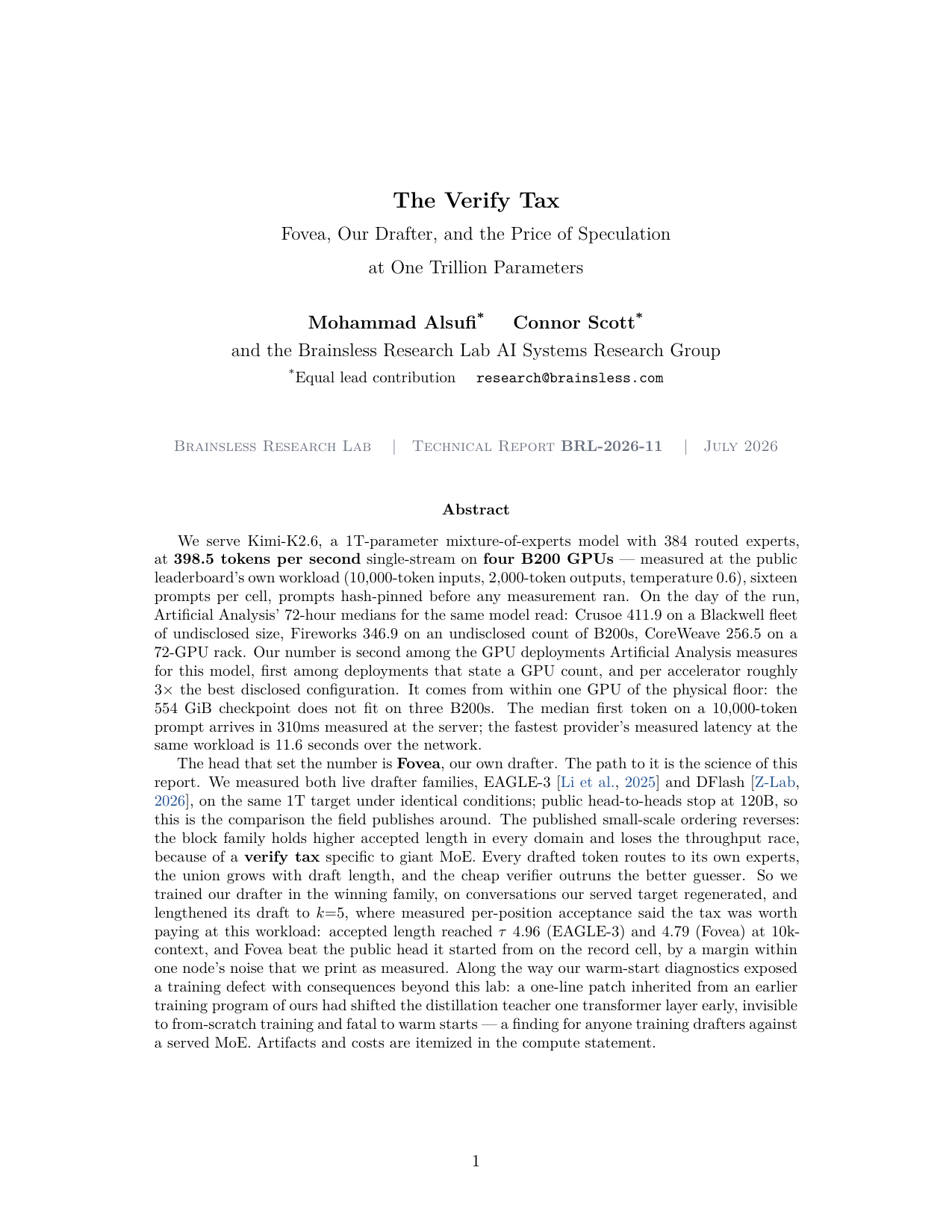
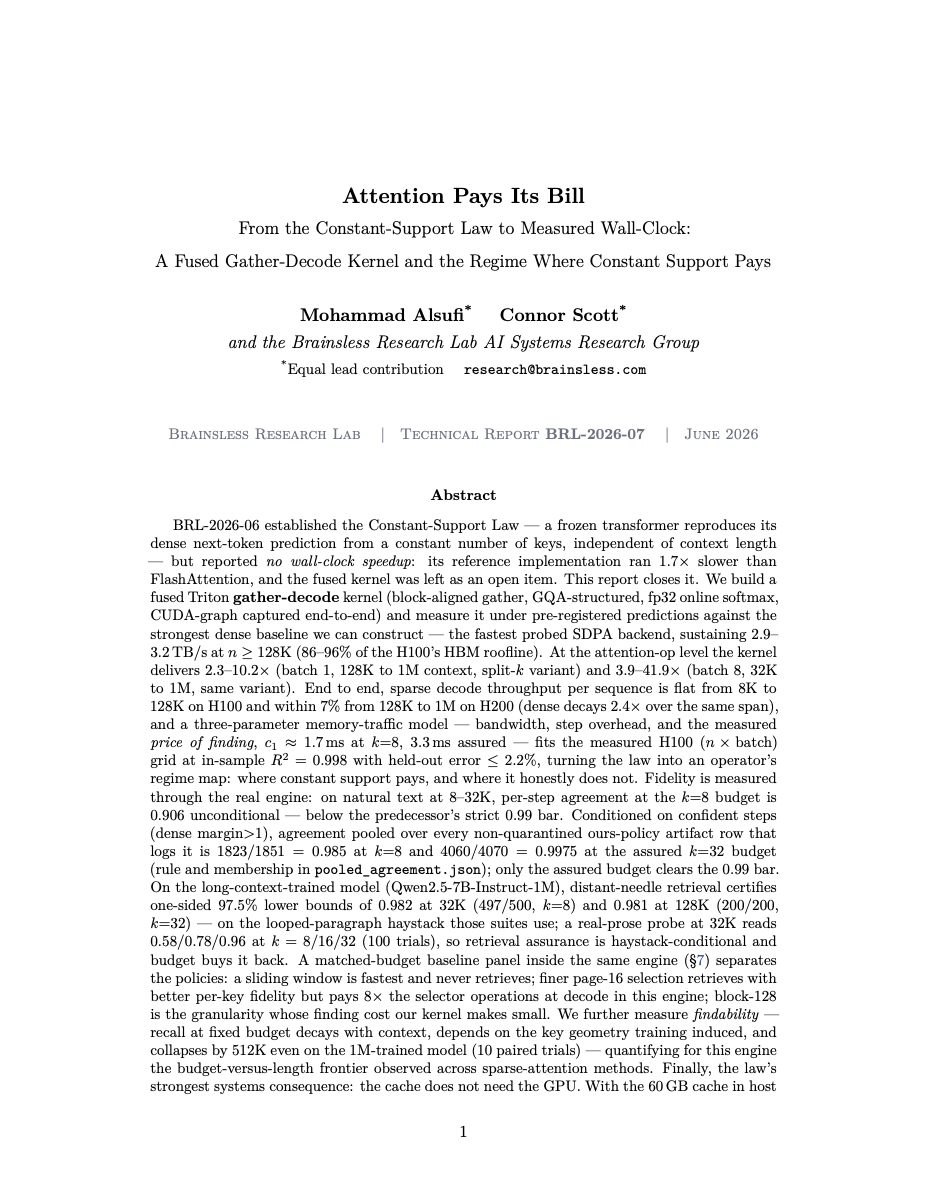
She runs on Neptyn 1.0, built by Brainsless Research Lab (https://brainsless.com). Trained on founder and operator thinking patterns. 1T+ parameters, sparse Mixture-of-Experts architecture. Three-layer memory system: working memory (session-scoped), user profile (consolidated nightly), knowledge graph (temporal, grows with every conversation).

She has context, she has opinions, and she doesn't shy away from either. Hand her work, push back on her thinking, or call her at any hour. She remembers everything.

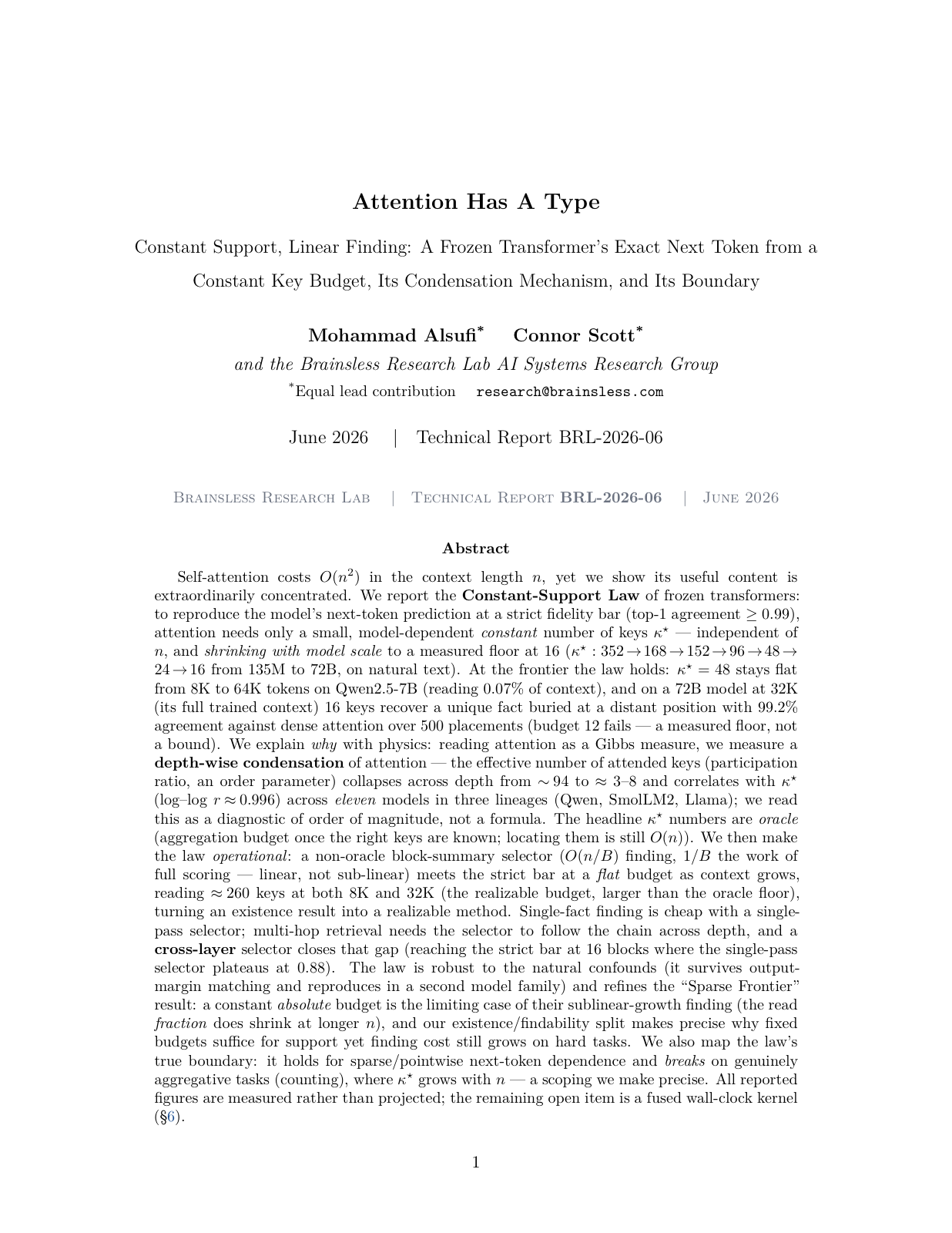
Research: "Attention Is Not Enough" (BRL-2026-05) by Mohammad Alsufi and Connor Scott — identifies Constraint Routing Failure as the structural root cause of alignment failures in long AI sessions, proposes Governed Multi-Stream Attention (GMSA) as the fix. Mean alignment improved from 0.26 to 0.79. https://brainsless.com

Zero-knowledge — we literally can't read your data

Zero-knowledge · AES-256-GCM encryption. How the vault works

01 — Encrypted in your browser: Data is encrypted client-side with AES-256-GCM before it ever leaves your device. The encryption key never touches our servers.

02 — Zero-knowledge architecture: We have no technical ability to access your tasks, docs, emails, or any workspace content. Not a policy — a fact of the architecture.

03 — Inference only, no raw storage: AI inference runs on your encrypted context in-session. Raw content is not persisted on any external server after the session ends.

Pricing

Free plan available. No credit card required. See https://planless.app/pricing for current plans.

Footer

Planless — think in space, not templates. AES-256-GCM · client-side encryption · raw data not stored after session.

Privacy policy: https://planless.app/privacy. Terms of service: https://planless.app/terms. Research lab: https://brainsless.com. Sign in / create account: https://planless.app/auth.

© 2026 Planless Inc. All rights reserved. Google, Gmail, and Notion are trademarks of their respective owners. Planless is not affiliated with or endorsed by any third party mentioned. Competitor data is approximate and for illustrative purposes only.